
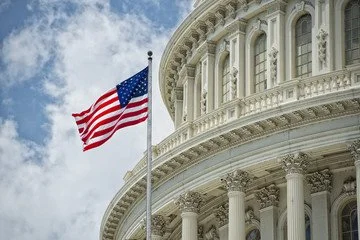
Politics can feel unusually close to daily life in the Washington, DC area. It shapes the conversation at school pickup, the mood at the office, the traffic on your commute, and the alerts that light up your phone before you have had coffee. For some people across the DMV, that constant closeness to the news has turned into something heavier: a steady, background hum of anxiety that never quite switches off. If that sounds familiar, you are not imagining it, and you are far from alone.
Why the Whole Town Feels Anxious
Political stress is widespread across the country. In the American Psychological Association's 2024 Stress in America survey, 77% of U.S. adults said the future of the nation was a significant source of stress, and 69% named the presidential election. The DC region carries an extra load. Here, policy is personal. A budget fight can mean a furlough. A reorganization can mean your team disappears. A leadership change can reshape the industry you have spent your career building. Even people who do not work in government often work alongside it, as contractors, lawyers, consultants, journalists, nonprofit staff, or small business owners whose livelihoods rise and fall with decisions made a few miles away.
DC is also a place where local and global problems sit side by side. The same city wrestling with housing costs, school concerns, and gridlock on I-495 is also the backdrop for protests, international crises, and decisions that ripple around the world. It can feel as though the whole town is holding its breath at once. And if you have watched friends, neighbors, or colleagues leave the area in search of something calmer, you may have quietly wondered whether you should too.
Beltway Culture Adds Its Own Pressure
Then there is Beltway culture. In a city full of ambitious, accomplished people, it can feel like everyone is very important and that you need to prove you are, too. The first question at a party is "What do you do?" Self-worth can become tied to your title, your access, and how plugged in you are. In that environment, stepping away from the news can feel irresponsible, and admitting you are overwhelmed can feel like weakness.
That pressure to stay informed, stay relevant, and stay "on" leaves very little room to rest.
How Political Anxiety Shows Up

Caring about the world is healthy. It becomes a problem when that care starts running your life. Political anxiety can look like:
Checking the news compulsively, even when it leaves you feeling worse
Doomscrolling late at night and struggling to fall asleep
A persistent sense of dread or hopelessness about the future
Irritability or anger that spills into conversations with loved ones
Tension with family members, friends, or coworkers who see things differently
Worry about job security tied to political decisions
Headaches, muscle tension, or stomach trouble without a clear cause
Pulling away from activities that used to bring you joy
What Actually Helps
Separate staying informed from staying flooded. The American Psychological Association's guide to managing stress related to political change recommends that you "stay informed, but know your limits." Try checking the news at set times instead of all day, and take regular digital breaks for things you enjoy.
Notice the catastrophizing. Anxiety tends to jump straight to the worst-case outcome and treat it as certain. When you catch yourself spiraling, ask: What do I actually know right now? What is still unknown? What would I tell a friend who was thinking this way?
Focus on what you can influence. You cannot control what happens on Capitol Hill, but you can choose how you spend your evening, whether you call a friend, and how you show up in your community. The APA suggests getting involved with an issue or organization that matters to you, including local efforts where you can see the impact directly.
Protect your relationships. In the same 2024 APA survey, 32% of adults said the political climate had caused strain with family members. Not every conversation needs to be a debate. It is okay to decide that certain topics are off the table at dinner, and the APA notes that when discussions become heated, it may be best to step away.
Take care of the basics. The APA recommends prioritizing sleep, exercise, and healthy eating, and avoiding alcohol and substance use as a way to cope. A walk along the C&O Canal or through Rock Creek Park is an easy place to start.
Remember that you are more than your job. In a town that often measures people by their titles, make time for close friends, family, and activities unrelated to work or politics.
When to Reach Out for Support
If political stress is affecting your sleep, mood, relationships, or ability to concentrate, it may be time to talk with someone. Therapy is not about telling you what to think or asking you to stop caring.It is a private and supportive space to sort through what you are feeling and build tools to stay engaged with the world without being consumed by it.
At The Smith Counseling Group, our therapists use evidence-based approaches, including cognitive behavioral therapy, to help clients manage anxiety and stress. You can learn more on our anxiety treatment page or explore our broader psychotherapy services. For teens who are absorbing political stress at school and online, our teen and adolescent therapy can help. And if political disagreements are straining things at home, family-based therapy can help your household find steadier ground.
Feeling the weight of the news?
The Smith Counseling Group helps DMV residents manage anxiety and stress tied to politics and life in the DC area. We see clients in person at our Maryland office in Maryland, Washington, DC, Bethesda, Chevy Chase, Northern Virginia, and Montgomery County. Telehealth is available to Maryland residents. Contact Us to Talk With a Therapist.
